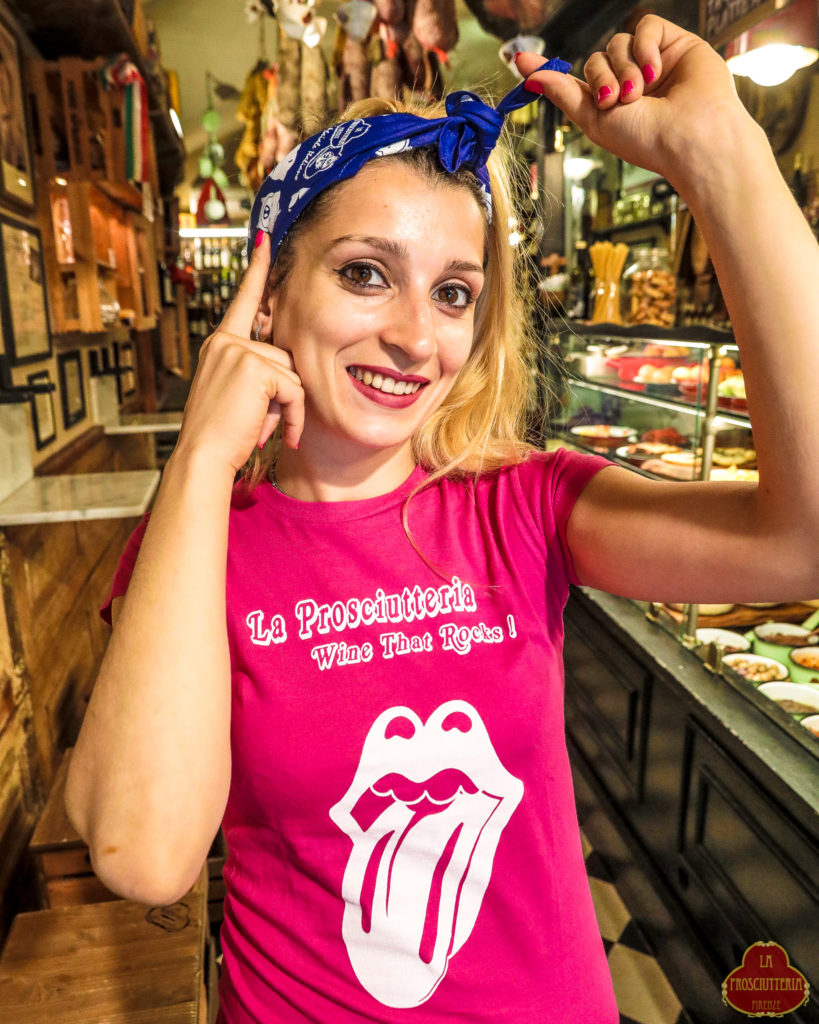
For March 8, we, too, celebrate our women, girls, handmaidens, or whatever you want to call them-the feminine strength of La Prosciutteria!
This day was established to commemorate the social, economic and political achievements of women, but also the discrimination they have been and are still subjected to around the world. The first National Women’s Day was celebrated on February 28, 1909, in the United States at the initiative of the Socialist Party of America, which chose this date in memory of the strike by thousands of New York shirtwaiters who, the year before, had forcefully demanded better working conditions.
The following year the anniversary was also introduced in Europe under the impetus of the Socialist International, which, while holding its congress in Copenhagen, decided to establish International Women’s Day to promote their rights and to support the campaign for universal suffrage. At that time, following the U.S. model, its celebration was set on the last Sunday in February. Austria, Denmark, Germany and Switzerland, in 1911, were the FIRST countries on the old continent to celebrate such a day.
Women’s Day in Italy and the mimosa as a symbol
In Italy, the first International Women’s Day was celebrated on March 22, 1922. It was not until 1946, at the suggestion of Teresa Noce, Rita Montagnana and Teresa Mattei, that the mimosa was instead identified as its official symbol. This choice was due to the flower’s blooming season, which always occurs in the first days of March, and to its costs, which are quite low. Moreover, yellow is the color that represents the transition from death to life, thus becoming a metaphor for the women who fought for gender equality.”